
Graduate Student Seminar Series Presents: Dark Matter Walks into a Likelihood Function
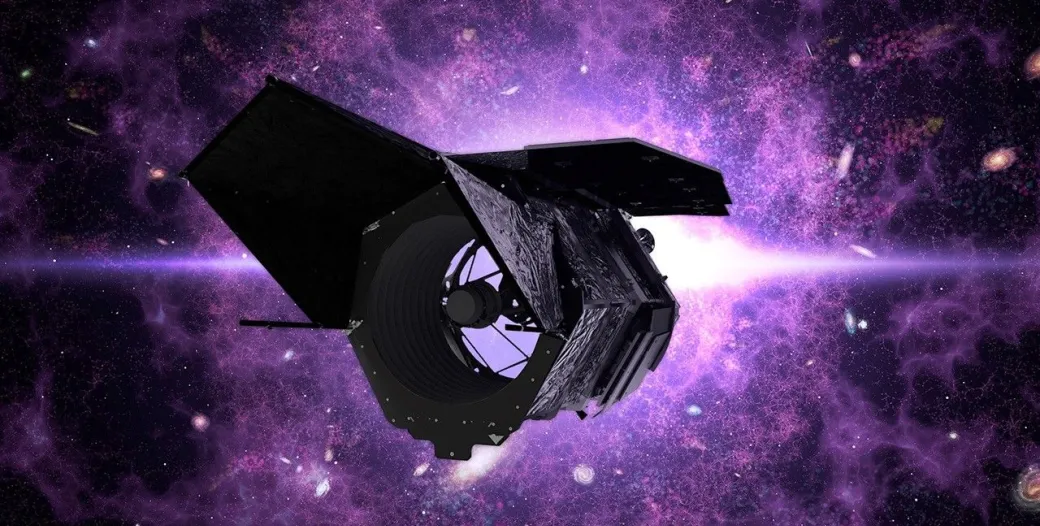
Gravitational lensing of galaxies by foreground galaxies that produces multiple deformed images, known as strong gravitational lensing, provides a uniquely powerful statistical probe of the concordance model of cosmology, Lambda Cold Dark Matter (ΛCDM), by enabling constraints on the abundance and properties of dark matter substructure. However, current observational samples are limited by the scarcity of systems with sufficiently high signal-to-noise ratios and angular resolution to support rigorous inference. The upcoming Nancy Grace Roman Space Telescope, scheduled for launch in Fall 2026, is expected to fundamentally transform this landscape by delivering wide-field, high-resolution imaging capable of identifying and characterizing a vastly larger population of strong lenses. This shift to large-scale, high-quality datasets presents both an opportunity and a challenge: extracting robust constraints on dark matter will require advances in scalable image processing, principled uncertainty quantification, and computationally efficient inference. Toward this goal, my research group has led the development of the pipeline to simulate and search for strong lenses using Roman, and using the resulting mejiro pipeline, we have simulated a population of galaxy–galaxy strong lenses with embedded dark matter substructure across cosmic time, incorporating realistic detector effects from Roman’s Wide Field Instrument. We estimate that the High Latitude Wide Area Survey will yield over 100,000 detectable strong lenses, with approximately 500 systems having sufficient signal-to-noise for detailed substructure characterization. Leveraging neural networks to discover and transdimensional Bayesian hierarchical inference (Daylan et al., 2018) to model these systems, we will be able to advance cosmology by testing divergent predictions of dark matter microphysics models.