
Graduate Student Seminar Series Presents: Re-imagining precision medicine: beyond what the eye can see
Medical imaging is one of the fastest-growing sources of medical data and is used in every field of medicine. Over the past few decades, increasing resolution, imaging volumes, and modalities have made these images more information-rich than ever. However, the capacity of the human eye to interpret them has remained fixed. As a result, rather than becoming easier to analyze, these images are becoming increasingly difficult to interpret.
At the limits of physics, medical images contain patterns that are not readily perceptible to the human eye but could indicate early signs of disease if detected. To investigate these patterns, we developed a computational framework called 3D transport-based morphometry (TBM), which automates the discovery and visualization of these hidden patterns. TBM quantifies structural changes in medical images and facilitates tasks such as classification and regression.
In this talk, I will demonstrate how TBM identifies changes in the brain associated with aerobic fitness in sedentary older adults. I will show how these patterns generate new hypotheses about the neuroprotective effects of fitness on the brain. Additionally, I will discuss how TBM could advance precision medicine.
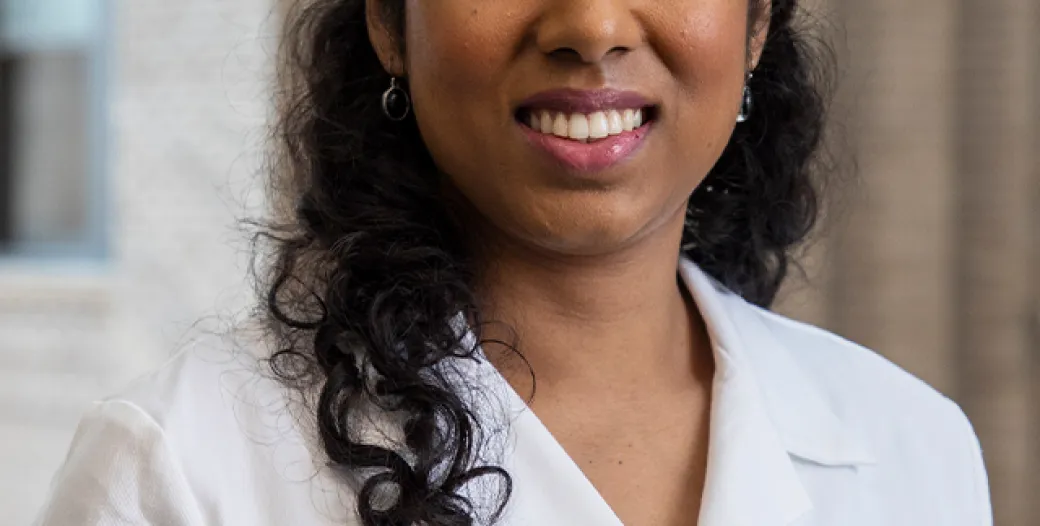
Shinjini Kundu, MD, PhD is a Neuroradiologist and Assistant Professor of Radiology at Washington University in St. Louis. She has affiliate faculty appointments in Biomedical Engineering and Electrical Engineering. Her lab focuses on developing new AI technologies to transform medical imaging and enhance diagnostic precision.
Her work has been published in journals such as Nature Medicine and Science Advances, and she was recognized on the MIT Technology Review's list of 35 innovators under 35.
She holds BS and MS degrees in electrical engineering from Stanford University. She completed her PhD in machine learning for medical imaging from Carnegie Mellon University and MD from University of Pittsburgh. She then completed her residency and fellowship in radiology at Johns Hopkins.
Her work aims to transform precision medicine by developing diagnostic technologies that detect diseases sooner, with unparalleled accuracy, and guide targeted treatments, ultimately improving patient outcomes.